Chef Notes
As summer progresses into early fall, we have more varieties of tomatoes available. Early cherries are joined by early-ripening small heirlooms, and then eventually the big, colorful slicers. We will get a small first flush of the big, charismatic tomatoes, and then there will be a lull as we wait for the second set of fruit to catch up. Every week, we have to consider whether we have enough of them to serve all 160 of our guests. Each week, we will decide if they are ready to be picked on Thursday, or should they be left on the vine to ripen until the last minute, leaving the cooks to go and do the picking?
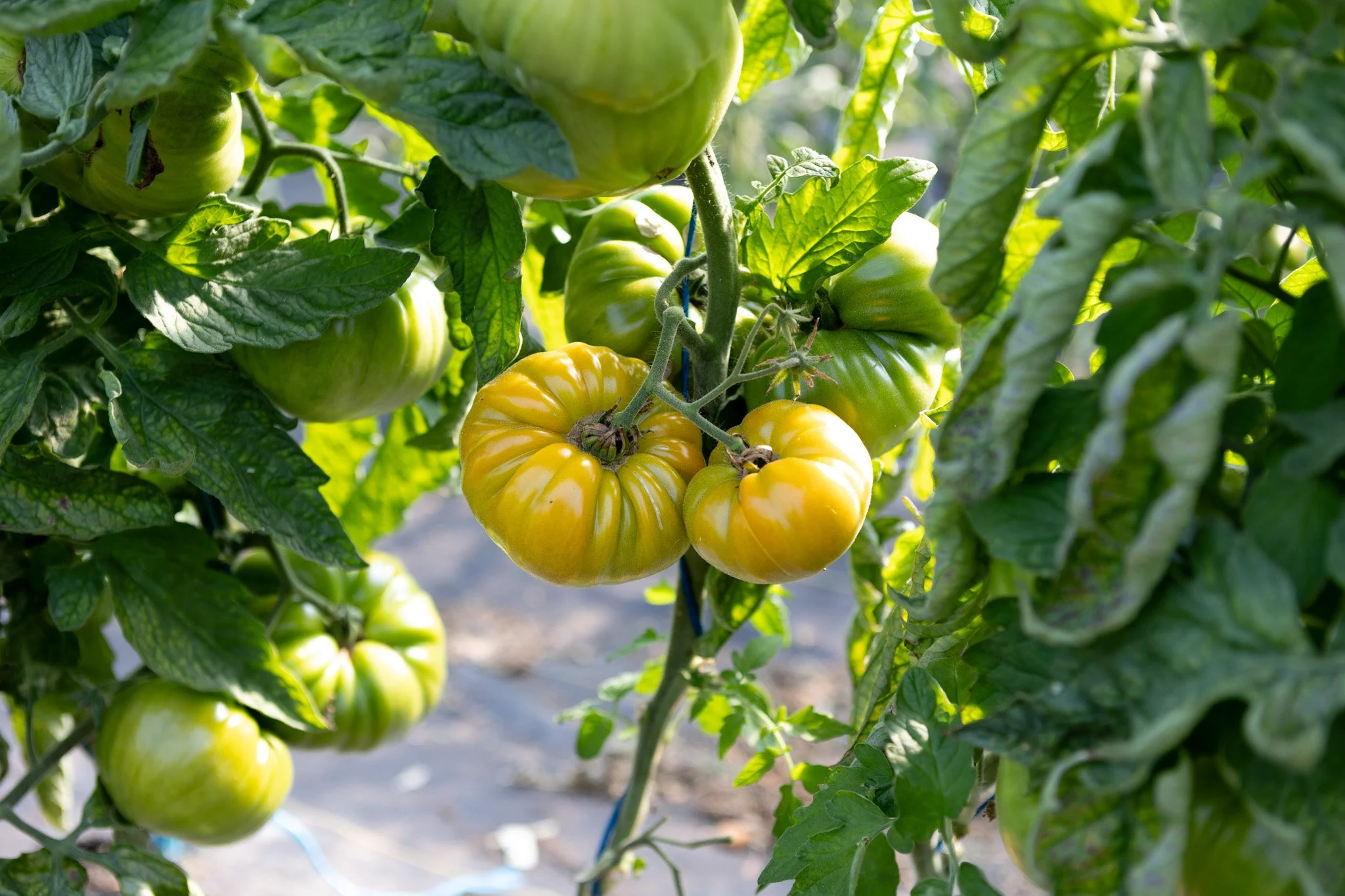
It’s an emotional roller coaster. All along the way, the sugar levels are rising consistently, week by week, as the flesh gets softer. This continues into mid-September, then the quality begins to reverse. They become firmer, more tinged with green, and display blemishes on the skin. Sooner than we would like, it is time to think about fried green tomatoes as the shortening days and cooler nights cause the plants to shut down.
If you are really using local, fresh produce, then seasonal cooking needs to be thought of in this way. A tomato is not a tomato, if you are paying attention to what the fruit is telling you. Your recipes need to change when the tomatoes change. Ditto potatoes. Ditto green beans. Fill in the blank.

Farmer Notes
I’ll skip the usual poetic comparison about falling leaves, shorter days, and changing seasons and get straight to the point: How the hell is it already fall?! Even after preparing for it for months, I’m still surprised by how quickly it arrives each year.
Many people don’t think of fall as a particularly abundant season for growers, but it’s actually one of my favorite times of year to grow. Surprisingly, many crops reach their peak flavor during this season, and there’s a good reason why.
Consider the difference between summer and winter grown carrots.
As temperatures fall, carrots convert some of their stored starches into sugars. This process is a natural survival strategy. The extra sugar acts as antifreeze, helping protect the plant’s cells from freezing. For those of us who enjoy eating carrots, however, it has an added benefit in sweeter, more flavorful vegetables. If you’ve never pulled a carrot from the ground after a few good frosts, you’re in for a treat. In my opinion, nothing compares.