Several of the things we create through preservation have origins in our first year of operation, when I began a plan to create specific products for our larder.
Chef Notes
As I mentioned, we do our best to source as much of our food as possible from our farm, so I needed to find a way to satisfy my need for spice. Forty-eight degrees north latitude is not typically identified with hot chilis, but from the outset of our farm’s operation, we have been growing chilis.
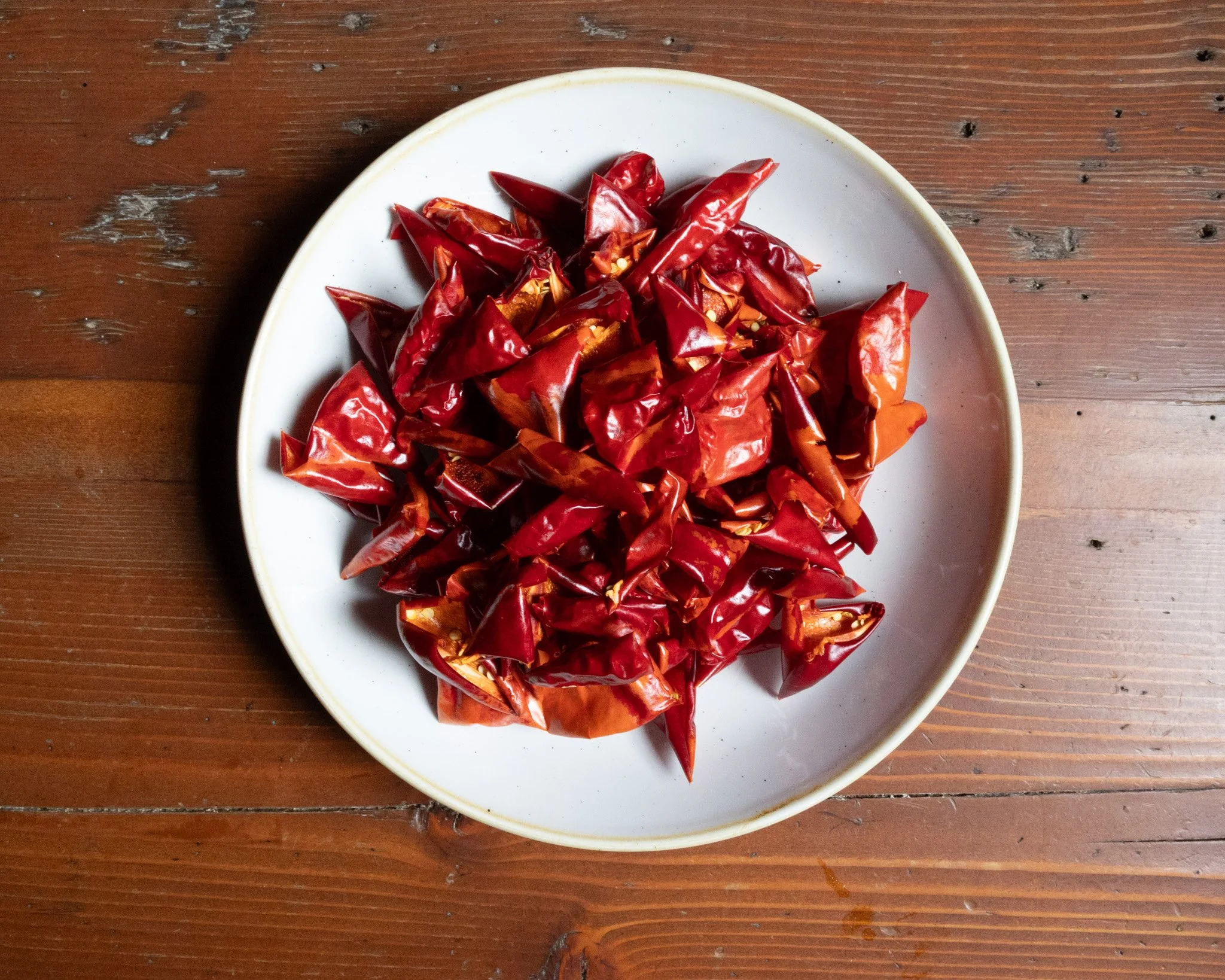
We are drying peppers for our chili powder, which we use in practically everything. We are fermenting kimchi and Calabrian-style peppers for the larder as well.
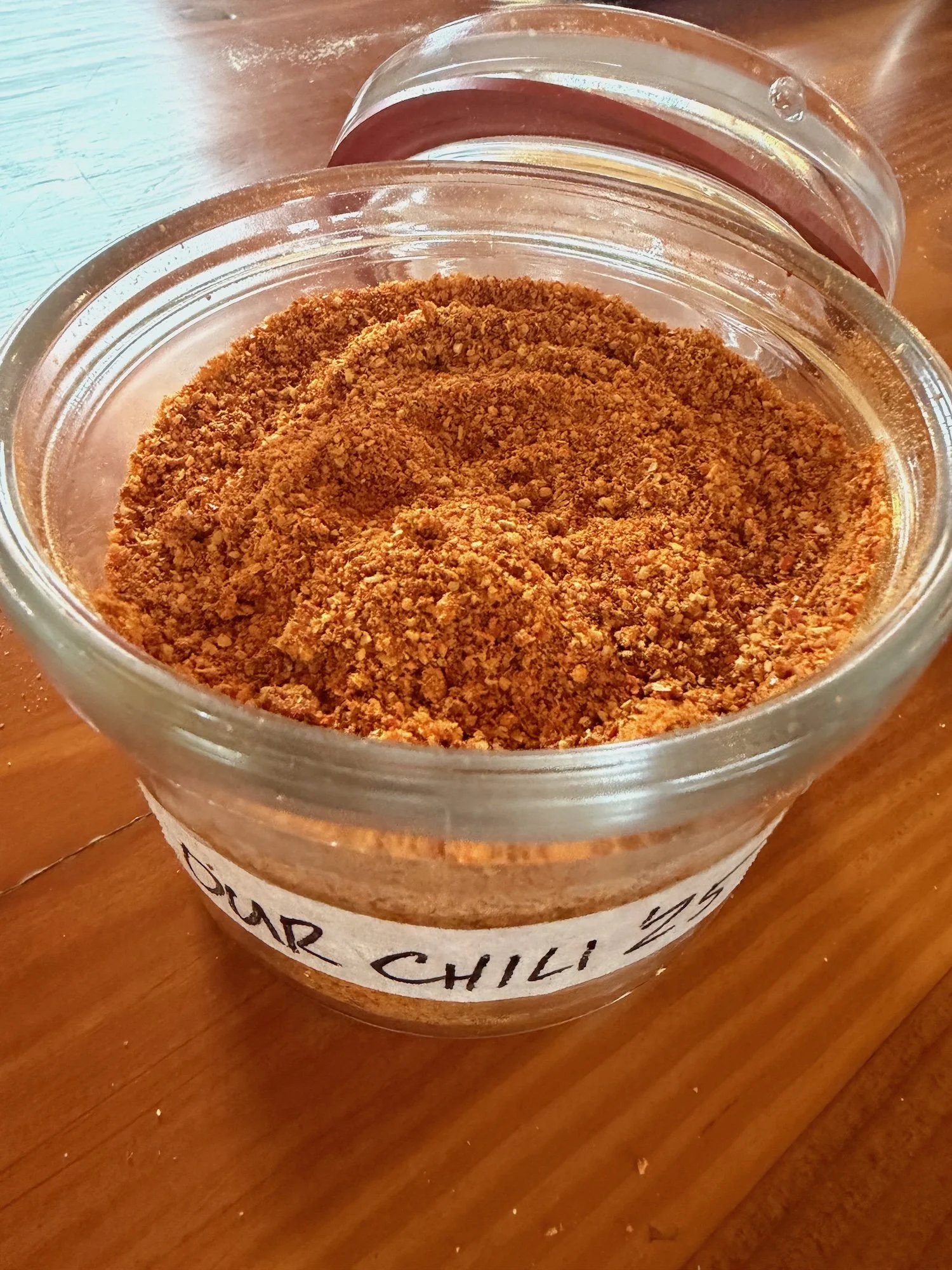
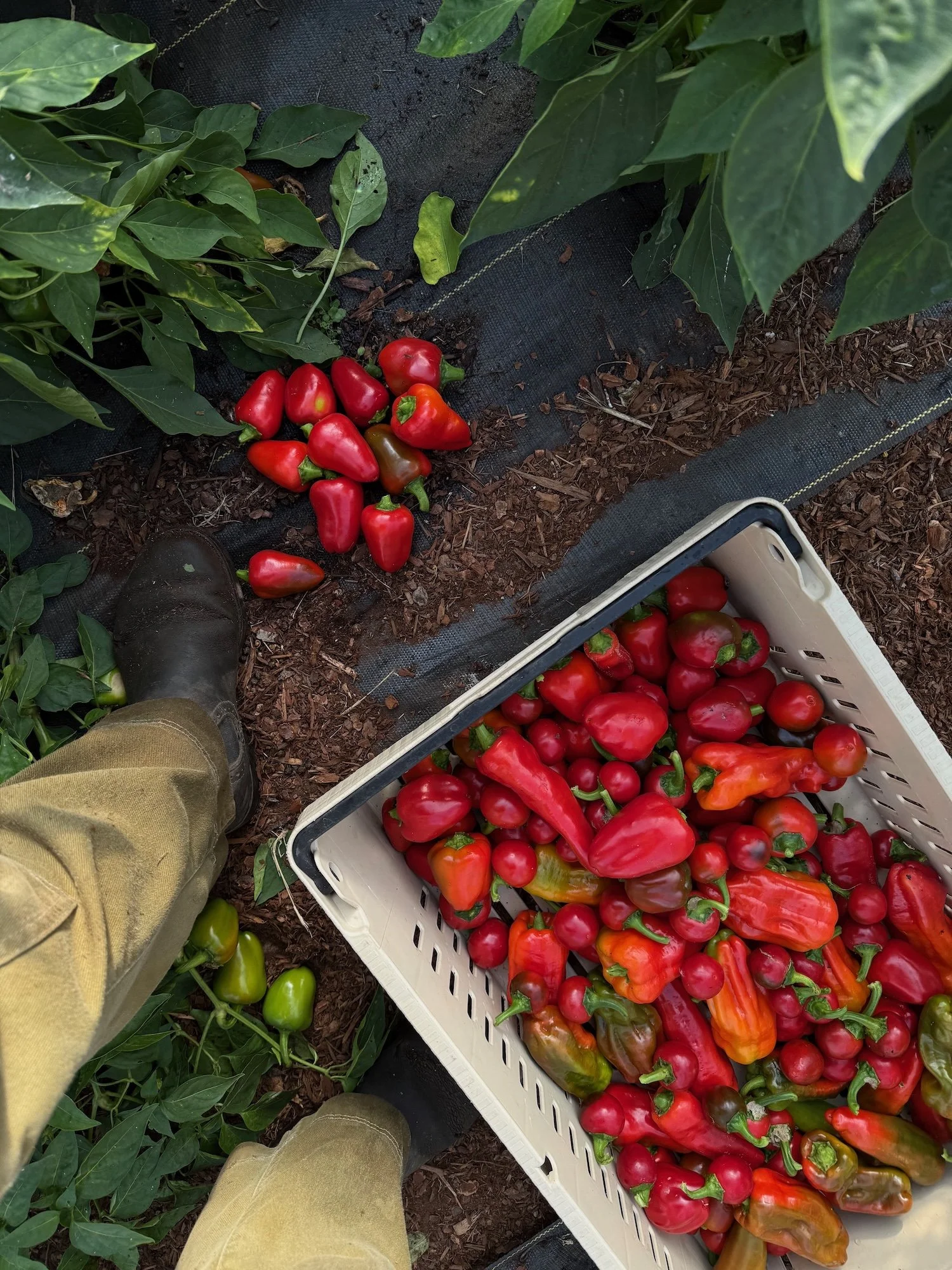
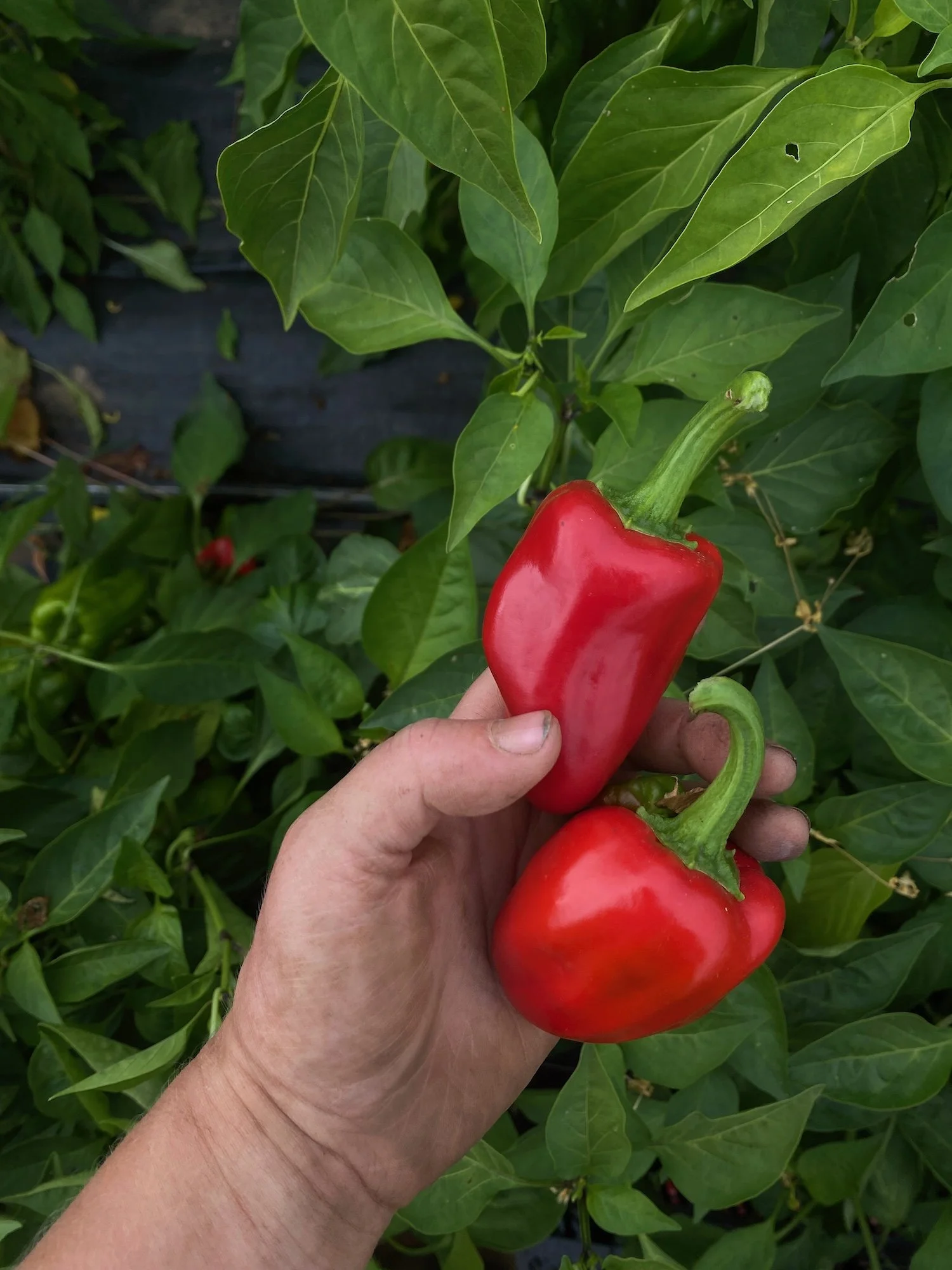
Our first farmer, Blake Menella, started growing a variety of chili called Cherry Bomb, which looks a lot like the stuffed red peppers you may have seen in the deli. I’m not sure why Blake selected this cultivar; they have a very high seed-to-flesh ratio, being completely packed with seeds. That said, they have thick flesh, and I found that when dried and ground along with most of their seeds, they make a tasty chili powder. We also started lacto-fermenting them to produce a product that is close to Calabrian chili paste. These two products are ubiquitous in my food; the chili powder is our “pepper” of choice, and we use the fermented chili or its liquor in anything that needs a little kick.
A couple of years ago, a neighbor gave me some of the fresh Aleppo peppers he had grown. The chilis had a deep red color, and they were much bigger than our cherry bombs, with rippling, undulating flesh and walls that are a lot thinner than those of the cherry bombs. Aleppo chili powder, named after the city in Syria it originated in, is known to be one of the world’s classic chili powders. I was eager to try them, so I dried them down and ground them. They made a nice addition to our own predominantly cherry bomb chili powder.
I had saved the seeds from some of the Aleppo chilis, and in 2022 we planted a patch next to the cherry bombs. I wanted to create a blend of these two chilis because the blend had just the right heat and great flavor. That year, we saved seeds again, and when we grew them out in 2023, we immediately realized they had crossed; about two-thirds looked like one of the parent peppers, small and round or flatter and wrinkled, but the remaining third looked different. The new cross was smooth like the cherry bombs, but bigger, triangular, and with fewer seeds inside. It had the thick walls of the Cherry Bomb and the larger size and lesser seed count of the Aleppo. It was a great surprise. You never know what you are going to get when things cross-pollinate. We had produced our own Bayview Bomb, and they are delicious. This has become our pepper of choice.